 NVIDIA
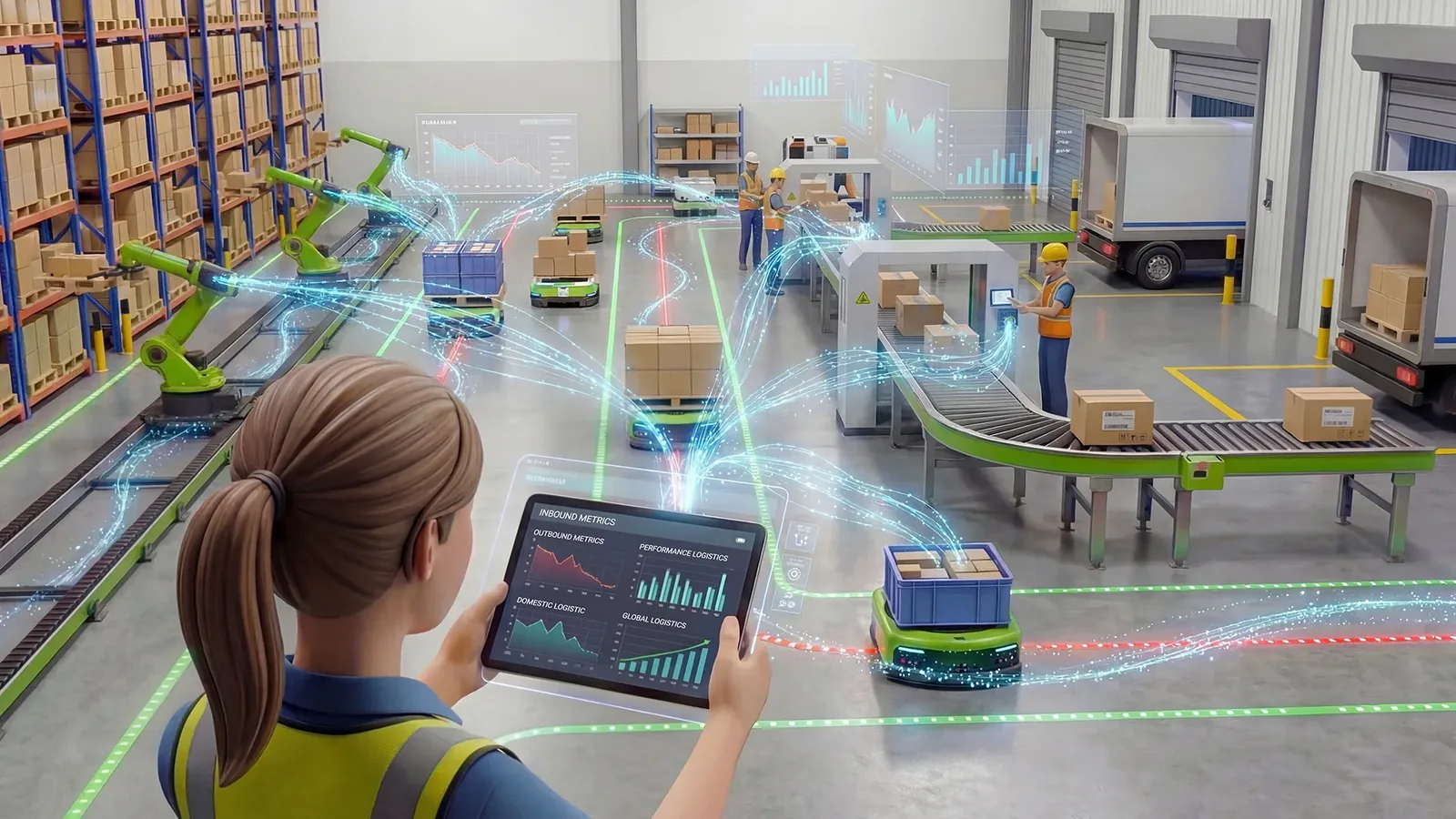
NVIDIA built a Digital Supply Chain Intelligence command center on Palantir Foundry to unify material, capacity, and qualitative signals for critical allocation decisions. The system, described in a September 10, 2026 post, combines a GPU-accelerated optimizer with a post-trained open-weight language model that learned from human planners' judgment. The specialized 30B model reached 86.7% allocation-decision accuracy on the development benchmark, leading the larger Nemotron 3 Ultra by 31.2 percentage points and its own base model by 69.2 points.
From wafer-out to first token
NVIDIA measures supply chain performance from wafer-out to first token, split into two intervals. Time-to-rack runs from silicon leaving the fab to an assembled system arriving on a data center floor. Time-to-token covers power, cooling, networking, and the software stack that makes infrastructure productive. The Grace Blackwell NVL72 platforms draw on millions of parts and thousands of suppliers, with dozens of OEMs and ODMs building final systems. A single compute tray, one of eighteen in a rack, requires two Grace CPUs, four Blackwell GPUs, and thirty-two HBM3e stacks. The supply chain for Vera Rubin is twice as large as Grace Blackwell.
Contract manufacturers cannot start assembly until every component arrives from one of three pools: parts from NVIDIA directly, parts NVIDIA stocks on consignment, and parts from suppliers. NVIDIA runs the clock from the moment a manufacturing site receives material to the moment it leaves, a metric called Time of Ownership (TOO). Allocation decisions run through the current quarter and the next, with nearest weeks already committed.
Solving the quantitative side with cuOpt
NVIDIA cuOpt, an open-source library for GPU-accelerated decision optimization, solves the weekly allocation as a mixed-integer linear program. The objective minimizes Time of Ownership across manufacturing sites. The solver draws inputs from the Palantir Ontology, which connects materials, sites, commits, capacity, allocations, production outputs, and unstructured signals into one governed data layer. cuOpt reports which constraints are binding, so planners can see whether Taiwan capacity or memory supply held the week's number down. Because the solve is fast, planners explore tradeoffs: what happens with ten percent less memory, or if a new manufacturing site comes online.
Codifying human expertise
Back-testing historical allocation decisions against actual outcomes revealed that human planners consistently outperformed the quantitative model. Planners worked from information the solver could not see: emails exchanged with partners, severe weather forecasts, geopolitical events, supplier debrief transcripts, and years of accumulated expertise. NVIDIA and Palantir built the workflow around those experts, capturing the allocation decision, rationale, expected result, and actual outcome. That data lives in the Ontology and serves as the foundation for training an LLM on expert judgment.
NVIDIA post-trained Nemotron 3.5 Lightning, chosen for its mixture-of-experts architecture and efficient inference. The model has 30 billion parameters with roughly 3 billion active per forward pass, large enough to learn a focused policy while keeping the post-training loop practical. Because Nemotron is open, organizations can post-train inside their own compute boundary without exposing operational data externally.
The training process uses NeMo Anonymizer to remove personally identifiable information, NeMo Data Designer to expand and balance examples, and NeMo AutoModel to train LoRA adapter parameters while base weights stay frozen. Palantir Autopilot manages the lifecycle end to end, launching jobs from Ontology data and keeping lineage intact. The evaluation replays each decision with only what was knowable that day, hiding the outcome, and comparing the model's recommendation against the planner's call and what actually happened. Accepted, edited, and overridden recommendations feed back into the Ontology for future governed retraining runs, compounding institutional knowledge and shortening onboarding.
Sources & references
NVIDIA: From Wafer-Out to First Token: Codifying Supply Chain Expertise with Nemotron and Palantir Foundry ↗Source consulted: 2026-10-15


