 NVIDIA
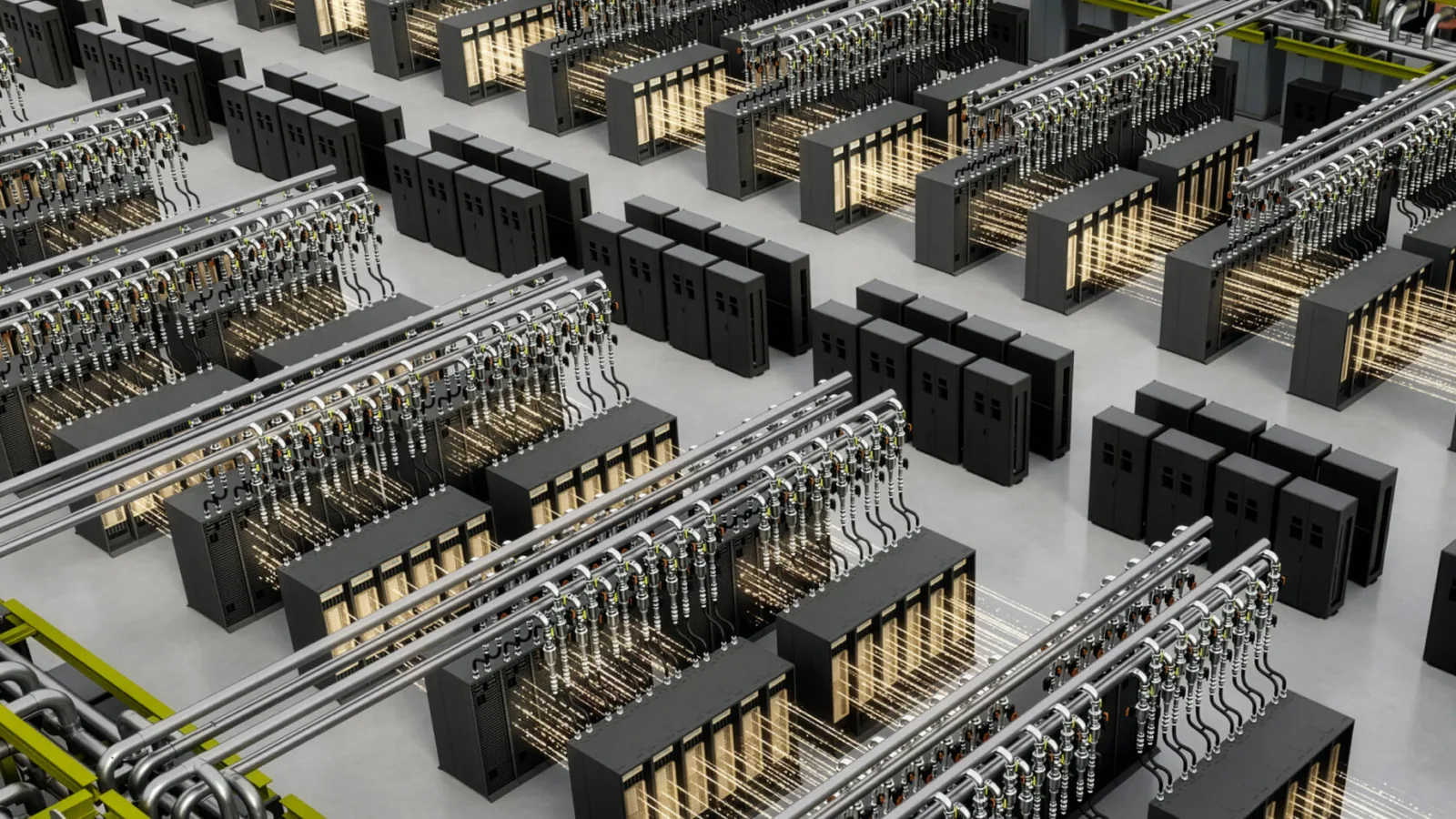
NVIDIA contributed its Vera Rubin rack and compute tray designs to the Open Compute Project (OCP) through the open MGX architecture, a move the company said will help scale AI factories worldwide. The contribution was announced at the OCP Global Summit, alongside the MGX 1.2 specification, which adds blind-mate liquid cooling, a 5,000 A busbar, and 19-inch equipment support. MGX 1.2 enables rack deployments up to 250 kW and improves serviceability, according to NVIDIA.
The Vera CPU rack, called NVL72, extends MGX for agentic AI workloads, supporting tool calling and sandboxed execution. This rack design is meant to handle the compute and memory demands of AI agents that interact with external tools and run code in isolated environments.
Open Software Stack
NVIDIA also detailed updates to its DSX operating system, which now includes open-source components: Config Manager, Cluster Readiness Engine, Rack Management Service, and Cluster API Provider. Config Manager automates switch configuration for AI factory fabrics, reducing manual effort. Cluster Readiness Engine stress-tests GPU clusters with real-workload simulations before training begins, helping operators catch failures early. Rack Management Service abstracts rack hardware for unified firmware management, while Cluster API Provider accelerates bare-metal deployment, cutting onboarding time from days to hours.
These tools target the operational pain points of running large-scale AI infrastructure, where configuration errors and slow provisioning can stall training jobs.
Facility and Power Standards
NVIDIA, AMD, Google, and Meta introduced the Open Data Center Specification v0.7, which defines a unified blueprint for AI factory facility design. This spec aims to standardize how data centers are built to house AI workloads, covering power, cooling, and physical layout.
Separately, Google, Meta, Microsoft, and NVIDIA announced the OCP Grid Resilience Specification, which requires AI infrastructure to recover to near-full load within two seconds after a grid disturbance. This requirement addresses the fragility of large GPU clusters to power fluctuations, which can cause cascading failures.
Visionbay introduced the K-1, an 800 VDC AI factory design built around NVIDIA Vera Rubin deployments. The K-1 centralizes AC-to-DC conversion at cluster-level power centers and distributes 800 VDC close to compute, reducing conversion losses and improving efficiency.
Networking and Ecosystem
NVIDIA and Cisco announced the USFP standard, the first 400 Gb/s module for networking fabrics. This new form factor aims to increase port density and bandwidth in AI networks.
NVIDIA and Google announced Falcon Transport support on future ConnectX-10 SuperNICs and BlueField DPUs. Falcon is a transport protocol designed for high-performance, lossless communication in AI fabrics.
Meta adopted NVIDIA Spectrum-6 102.4 Tb/s Ethernet switches for Vera Rubin AI factories. Spectrum-6 provides 200 G per lane lossless Ethernet fabric with twice the capacity of Spectrum-4, according to NVIDIA. Meta's N-IceCube switch runs FBOSS, an open-source network OS built on the Switch Abstraction Interface, giving Meta control over its network stack.
Spectrum-X Multiplane technology, enabled by Spectrum-6 and ConnectX-9, distributes GPU traffic across up to eight planes. This allows AI factories with over 100,000 GPUs to scale with fewer switch tiers and lower cost, NVIDIA said.
Ian Buck, NVIDIA VP of hyperscale and HPC, highlighted open infrastructure as critical for scaling AI factories. The announcements reflect a broader push to make AI infrastructure more modular, open, and resilient, which matters for engineers who deploy and operate these systems at scale.
Sources & references
NVIDIA: OCP Global Summit: Amid Ecosystem Adoption, NVIDIA Opens Vera Rubin Architecture to Help Scale AI Factories Worldwide ↗Source consulted: 2026-10-15


