AMD's new Typical Attained FLOPs (TAF) metric measures sustained GEMM throughput across a fixed set of workload-derived shapes. On one MI325X GPU, TAF results were 606 TFLOPs FP16, 616 TFLOPs BF16, and 1,143 TFLOPs unscaled FP8.
AMD details serving Kimi-K3 MXFP4 on MI300X and MI325X using a 2P2D disaggregated setup, kernel substitution for MXFP4, and fixes for RDMA and recurrent-state bugs, achieving 57/57 recall at 900K tokens.
AMD published MI455X versus MI355X inference results from Advancing AI 2026, covering DeepSeek-V4-Flash serving ratios and microbenchmarks for MXFP4 GEMM, MLA decode bandwidth, and networking.
AMD's Primus framework pre-trains hybrid LLMs from scratch on eight MI355X GPUs, using a single configuration string to interleave MLA attention with linear-recurrent mixers. Five models completed training with no NaN values, and released configs allow reproduction.
AMD published a validated recipe for serving the 744B-parameter GLM-5.3-FP8 model on a single 8-GPU MI300X node using DP8+EP8, reporting 147% higher output throughput than TP=8 on a long-context workload.
AMD's ROCm 10.1 release targets data-movement bottlenecks with hipFILE async and batch I/O, adds NUMA-aware host memory allocation, and introduces a unified ROCm CLI for installs and monitoring.
AMD's AIM containers now offer a unified deployment experience across Radeon, EPYC, and Instinct hardware. Dry-run and list-profiles commands let you preview profile selection before starting a server, with automatic tuning of engine arguments and environment variables.
AMD's TraceLens Agent turns raw PyTorch profiles into prioritized, evidence-backed optimization reports, using sub-agents for compute, system, and fusion analysis with guardrails for reliability.
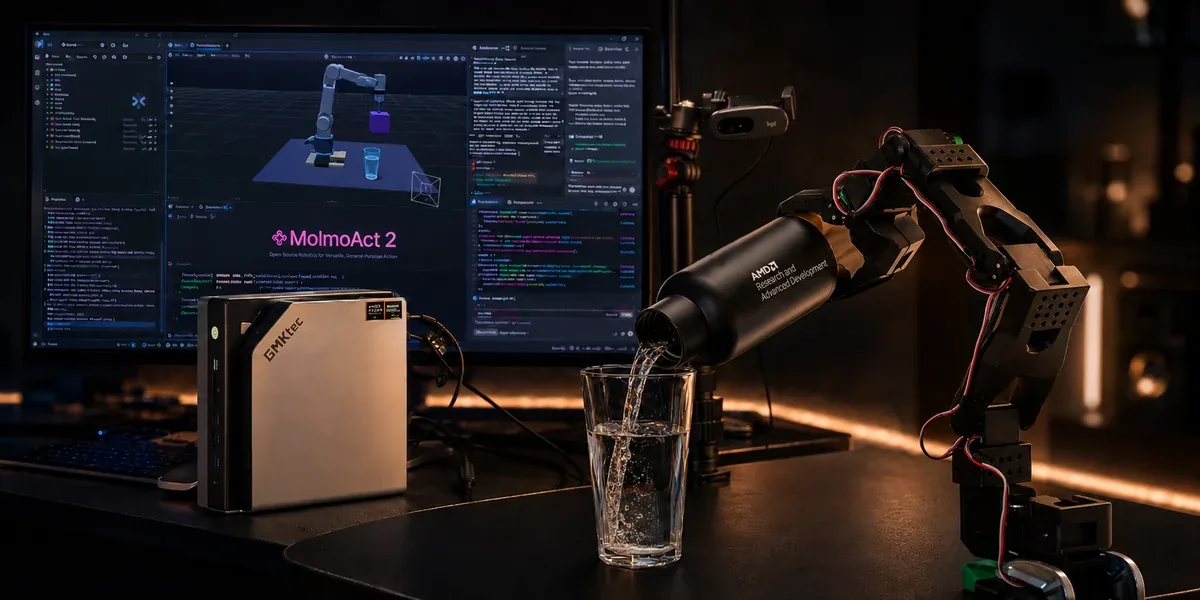
AMD shows a vision-language-action model driving robot arms from a browser on a single Ryzen AI Max+ 395 mini PC. The tutorial covers zero-shot transfer across arms, real-time planning, and LIBERO evaluation using the Ryzers container framework.
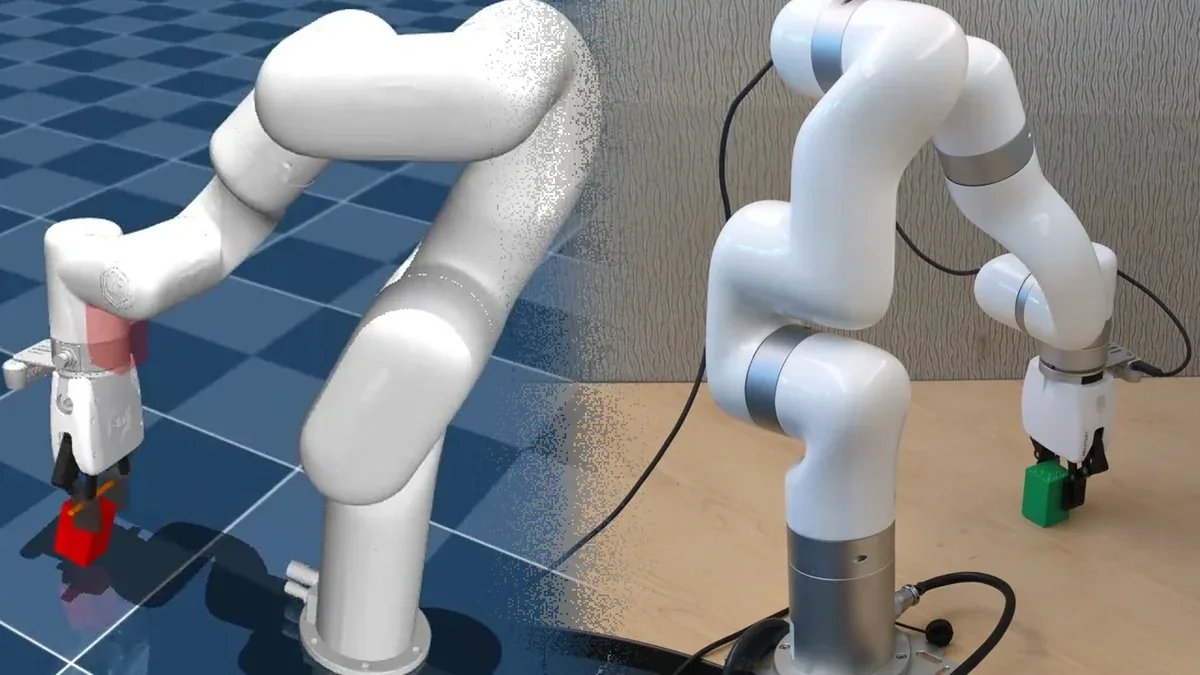
AMD trained a pick-and-lift policy for a UFactory XArm-6 in MuJoCo on Instinct GPUs and transferred it zero-shot to the real robot, with perception on a Ryzen AI 300 Mini-PC.
AMD and PyTorch engineers upstreamed FP8 training optimizations for AMD Instinct GPUs into TorchTitan and TorchAO, delivering throughput gains on dense and MoE models through kernel fusion and format correctness fixes.
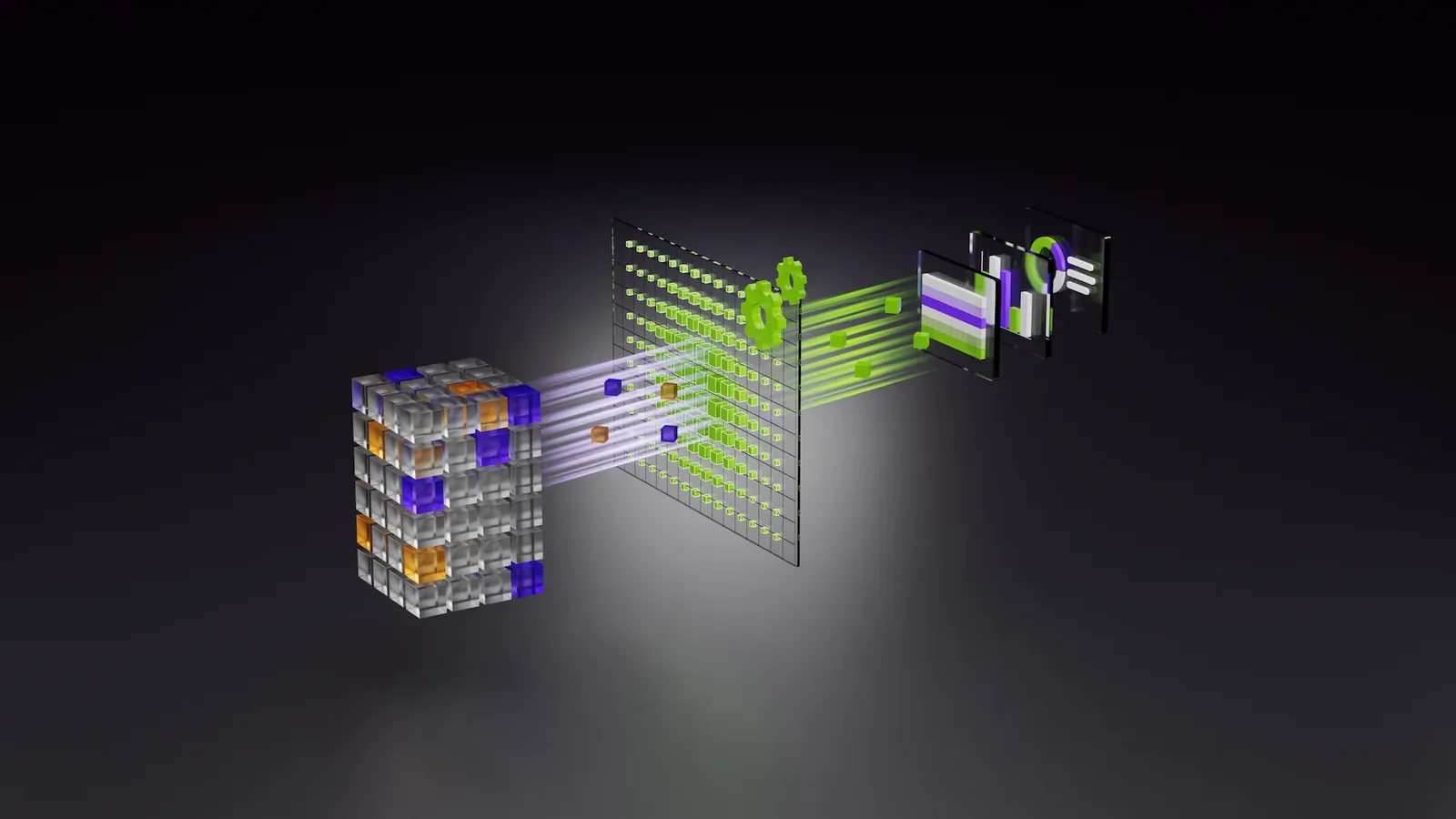
NVIDIA's GQE reference architecture executes SQL on GPUs with cuDF, nvCOMP, and nvSHMEM, using pipeline parallelism, hybrid compression, and zone-map pruning. On a GB200 GPU it completes all 22 TPC-H queries in 9.0 seconds, a 7.5x speedup over DuckDB on dual-socket AMD Turin CPUs.
llama.cpp b11623 adds a SIMT implicit GEMM convolution path for AMD GPUs that skips WMMA, with a guard for short reductions. The release also updates build assets and disables KleidiAI on macOS.
SGLang v0.5.19 brings beam search, DeepEP v2 with ElasticBuffer, LayerNorm sequence parallelism, and support for new models like Qwen3.8 and Granite 4.2. Performance gains target Hopper, Blackwell, and AMD GPUs.
SGLang v0.5.18 brings new diffusion and autoregressive models, overlapped checkpoint staging for faster startup, a TP LMHead all-to-all optimization, and NVFP4 checkpoint support on AMD GPUs.
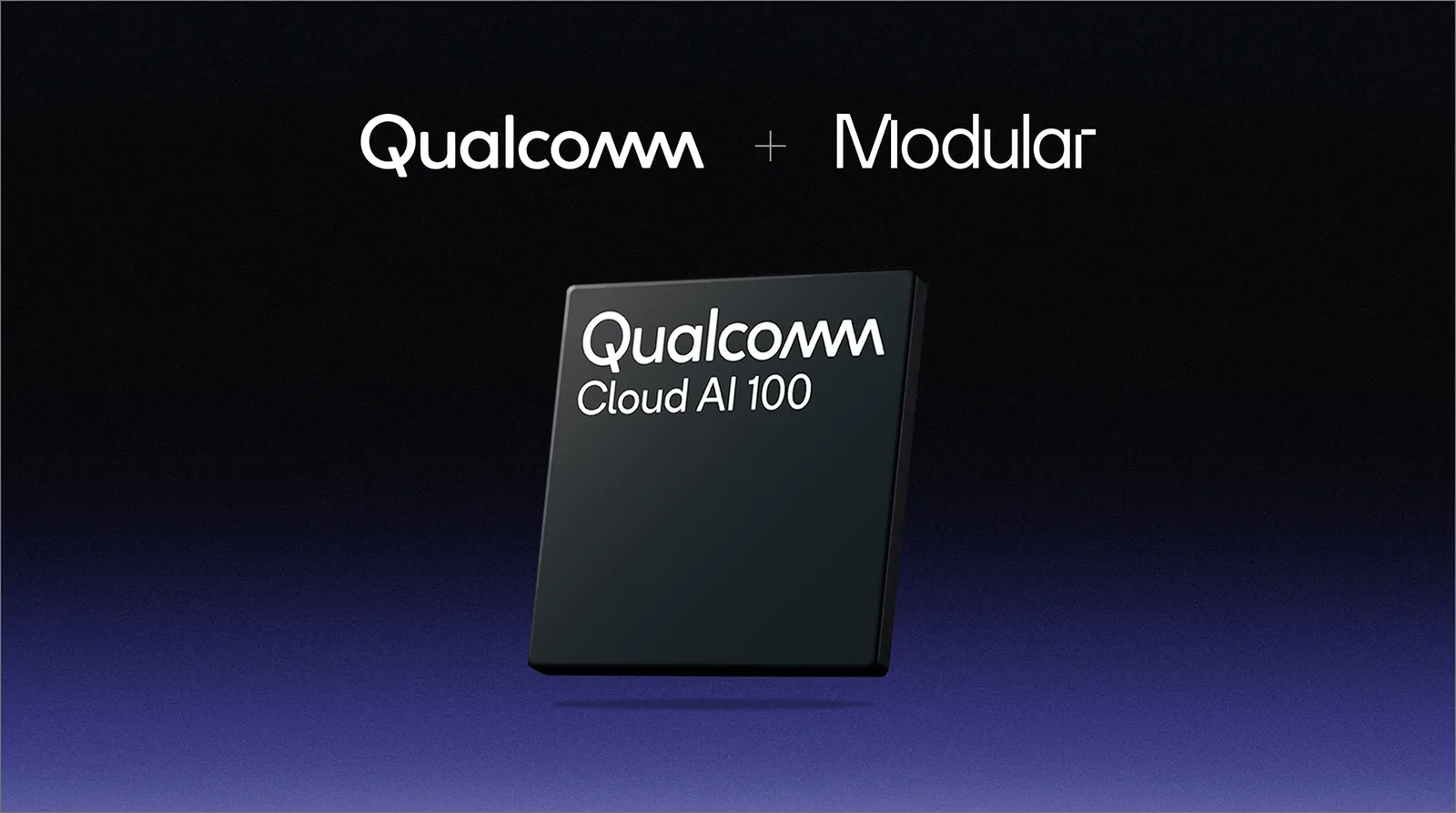
Modular announced native support for Qualcomm's Cloud AI 100 Ultra NPU in its MAX and Mojo platform, letting developers run the same code on NVIDIA, AMD, and Qualcomm silicon without rewrites. The bring-up reached Gemma 4 serving in under six months.
We count visits on the server, cookie-free. You can also let this browser tell us how long you read, how far you scroll and which links you follow. It stays with us.








 NVIDIA
 llama.cpp