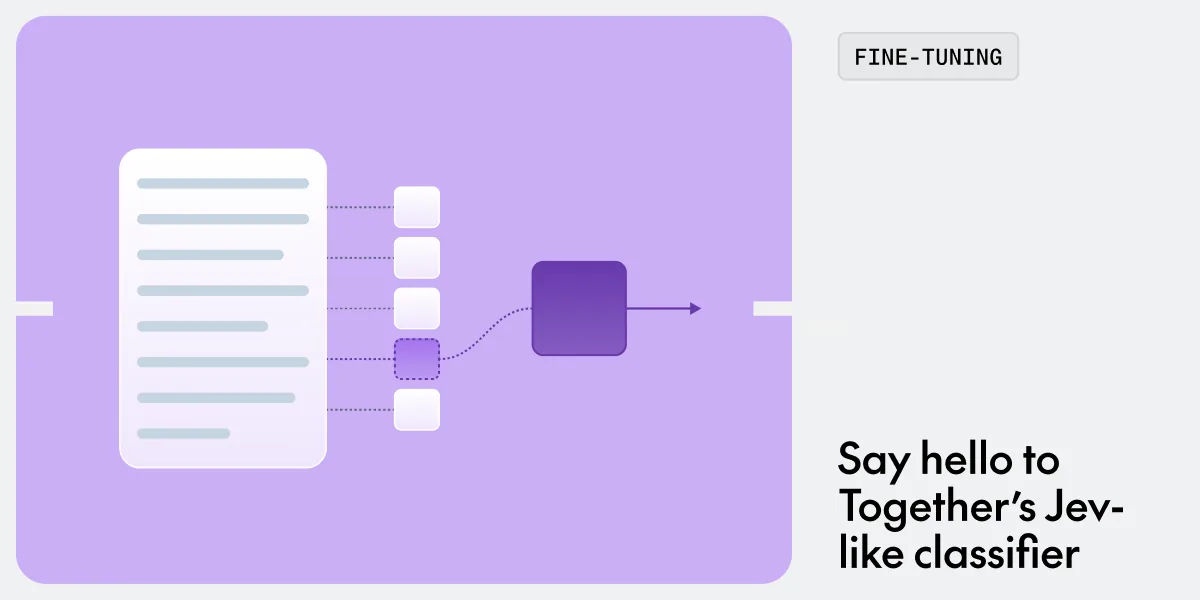
Together AI shows how to fine-tune a 4B classification model on 37,840 examples for about $17, then deploy it to a dedicated H100 endpoint and query it with JSON input and output.
A global fintech moved its coding assistant to Together AI's Dedicated Model Inference, running GLM-5.2 on 56 B200 GPUs. The migration fixed bursty traffic queues and gave the team self-service scaling and model updates.
Together AI expanded its fine-tuning service with support for new open-weight models, live experiment tracking, expert-layer LoRA adapters, early stopping, dataset inspection, and price reductions of up to 70% on selected models.
Together AI's kernels team adapted ThunderKittens for NVIDIA Vera Rubin NVL72, using wider tensor core K steps, larger tensor memory and shared memory, plus a B-side collector, to push NVFP4 GEMMs past 22 PFLOPS.
Together AI reports GLM-5.3 ties Claude Fable 5 on DeepSWE pass@1 while costing $3.99 per rollout versus $21.63. Per $100, GLM-5.3 solves 17 tasks, Claude Fable 5 solves 3. A routing strategy escalates to Claude Fable 5 for 81.1% accuracy at $10.74 per task.
Together AI's DeepSWE comparison shows DeepSeek V4 Pro 0813 and Claude Fable 5 fail on different tasks, enabling a Pro-first cascade that solves 82.7% of tasks at $8.28 each, beating Fable alone on accuracy and cost.
Together AI and academic collaborators introduce ThunderAgent, a program-level scheduler that treats agent workflows as schedulable units, cutting KV cache thrashing and delivering up to 2.5x single-node throughput and 2.4x speedup on 8 nodes.
Together AI's updated Dedicated Model Inference platform adds stable endpoints, canary and blue-green rollouts, A/B and shadow testing, and autoscaling. A closed beta for custom training with RL and SFT is also open.
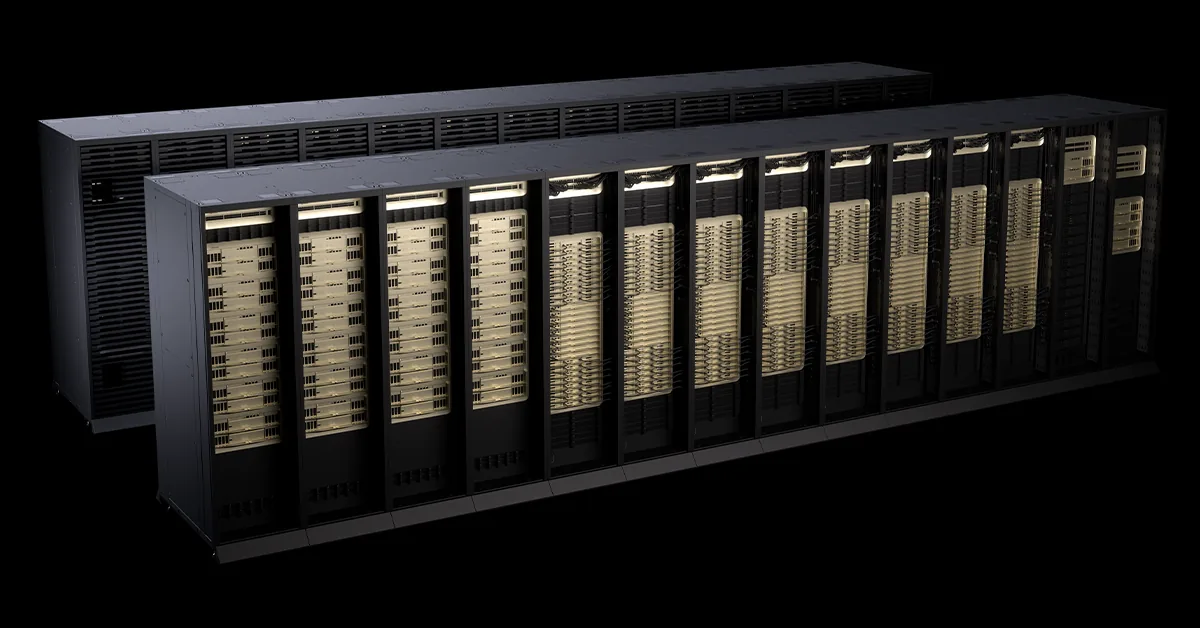
NVIDIA positions Vera Rubin as a platform for continuous post-training workloads in agentic AI, claiming it can train the largest models with one-fourth the GPUs of Blackwell. The post details benchmarks for Nemotron 3 Ultra and partner deployments from Prime Intellect, Perplexity, and Together AI.
Together AI announced an $800 million Series C led by investors including NVIDIA and Aramco Ventures, with commitments for over 500 MW of compute capacity. The company cites 6x to 20x cost reductions for customers using open-weights models in production.
Together AI had nine papers accepted to ICML 2026 in Seoul, covering agent serving, test-time reinforcement learning, long-context training, and Mixture-of-Experts latency. The papers include DSGym, ThunderAgent, TTT-Discover, RARO, V1, Aurora, Untied Ulysses, and Opportunistic Expert Activation.
Together AI's new benchmark tests LLMs on 87 real-world multi-GPU kernel problems. The best model solves 28 correctly, and only 22 beat the PyTorch baseline, showing frontier models still lag on fast kernel generation.
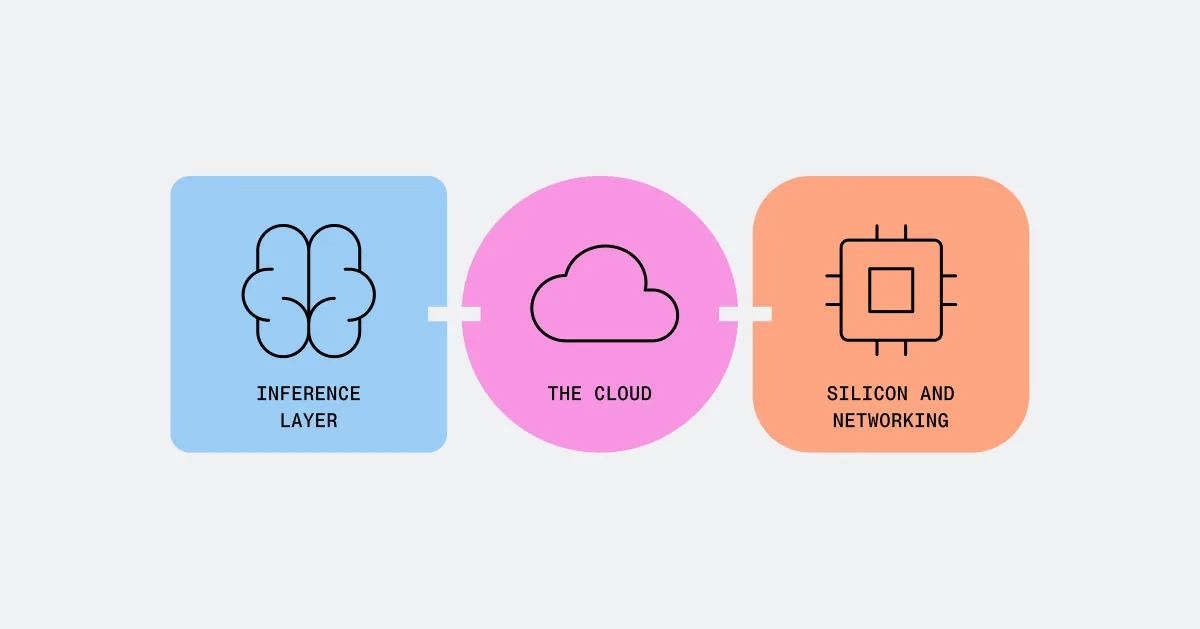
Together AI is working with IBM and NVIDIA to run a dedicated NVIDIA B300 GPU cluster on IBM Cloud with Spectrum-X Ethernet, as the first customer on that infrastructure. The company says it serves hundreds of trillions of tokens per month to over a million developers.
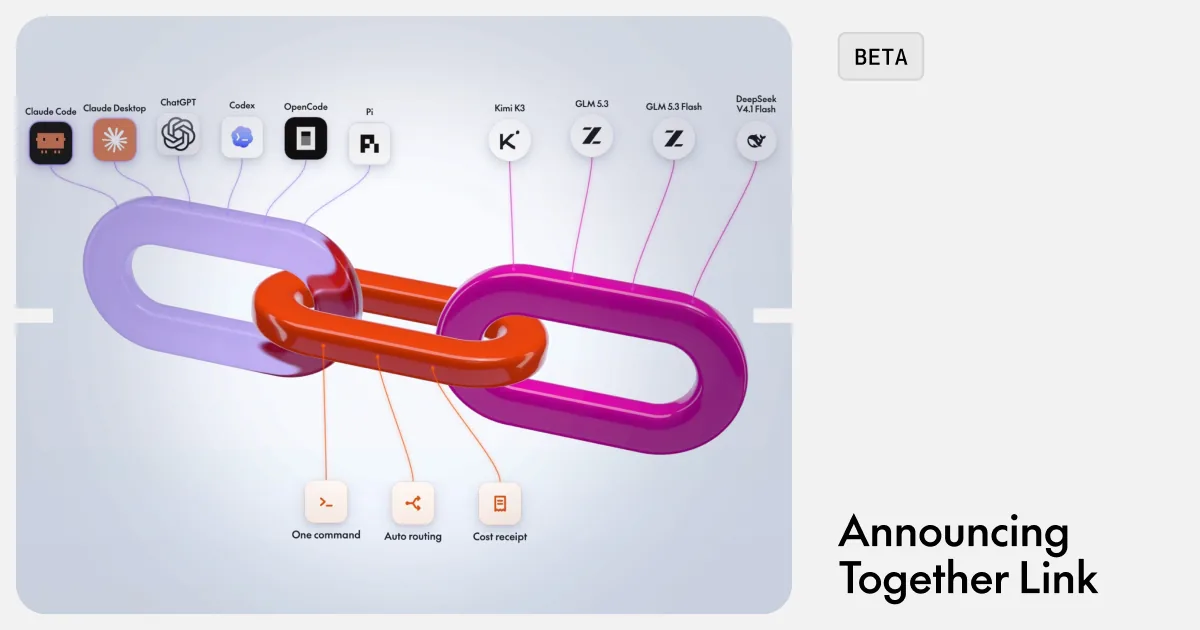
Together AI's new Link tool lets teams use Claude Code, Codex, and other agents with open models like GLM 5.3 and DeepSeek V4.1 Flash, with per-session cost tracking and a router that picks models based on task difficulty.
Together AI becomes the launch platform for Moonshot AI's open-weight models, starting with the 2.8-trillion-parameter Kimi K3. The partnership covers day-zero access, post-training options, and deployment across serverless, provisioned, and dedicated inference.
Together AI explains the failure domains behind each reliability tier, from node failures to regional outages, and what architecture is required to survive them. The post also details how the company measures uptime and what to ask providers before committing.
Together AI shipped reliability and control features for GPU Clusters: passive health checks, auto node repair, a rebuilt Slurm-on-Kubernetes stack, external OIDC for Kubernetes RBAC, startup scripts, and an acceptance-test opt-out for smaller clusters.
We count visits on the server, cookie-free. You can also let this browser tell us how long you read, how far you scroll and which links you follow. It stays with us.
 Together AIInferenceGuide

 NVIDIA