Apple researchers ran a week-long study with Wizard of Oz probes to see how people define their own machine learning phenomena, identifying four sites where users negotiate ontological boundaries in personalized sensing systems.
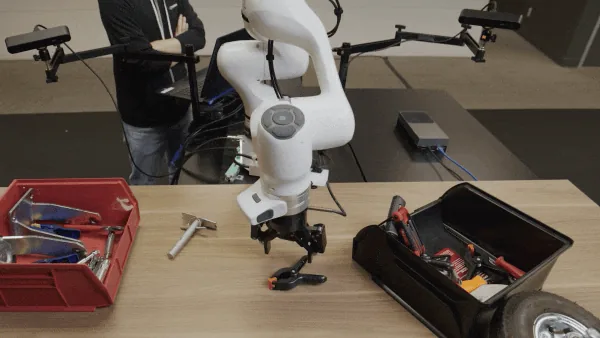
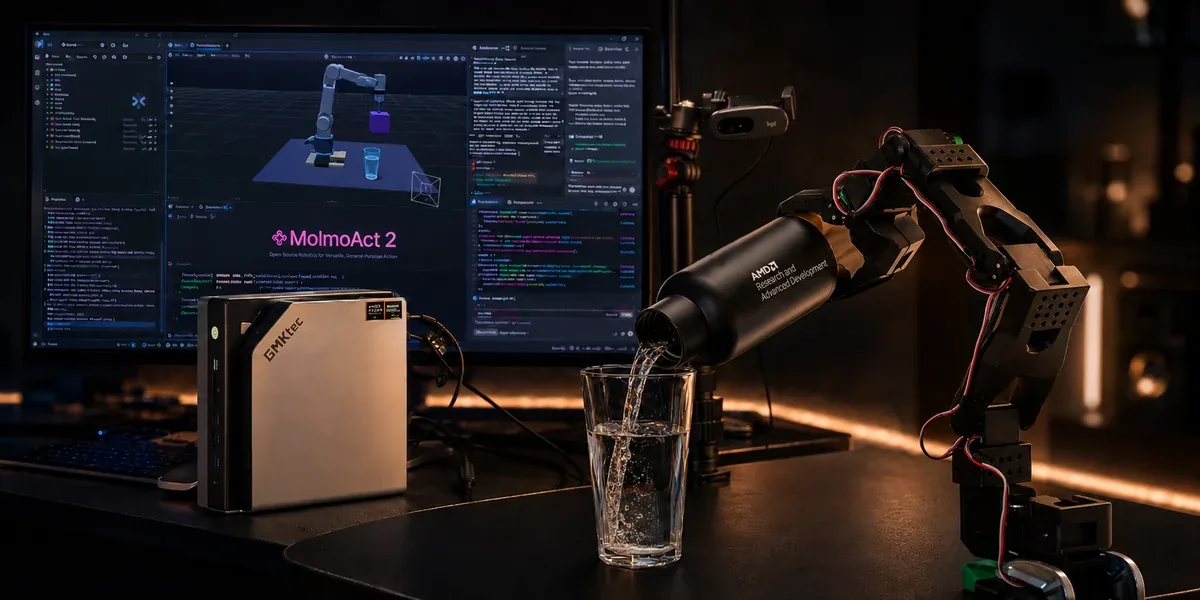
AMD shows a vision-language-action model driving robot arms from a browser on a single Ryzen AI Max+ 395 mini PC. The tutorial covers zero-shot transfer across arms, real-time planning, and LIBERO evaluation using the Ryzers container framework.
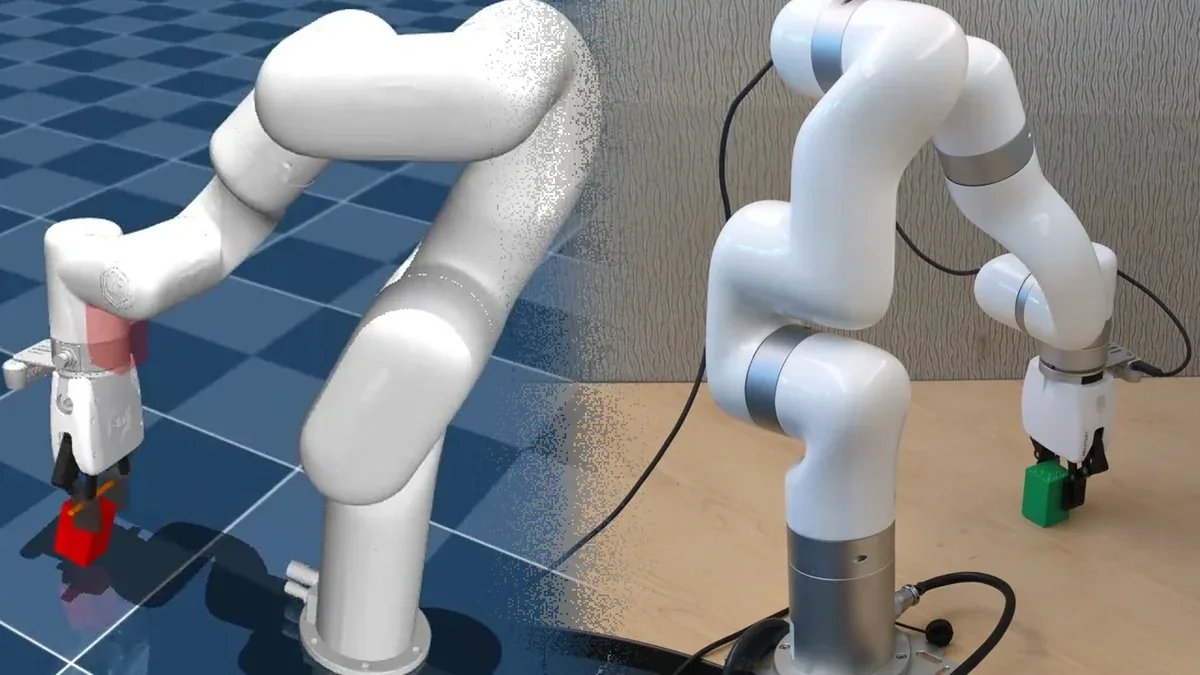
AMD trained a pick-and-lift policy for a UFactory XArm-6 in MuJoCo on Instinct GPUs and transferred it zero-shot to the real robot, with perception on a Ryzen AI 300 Mini-PC.
NVIDIA's COMPASS workflow uses AI agents to automate validation, scene preparation, residual training, and evaluation for robot navigation policies, with human approval gates and evidence tracking.
NVIDIA's Cosmos 3 Edge, a 4B omni-model, runs natively on Jetson Thor for robot manipulation. Post-trained on the Cosmos3-DROID dataset, it generates action chunks in about 1.53 seconds on Jetson AGX Thor T5000, achieving 22.9% success in closed-loop RoboLab evaluation.
NVIDIA engineers used a coding agent with the Holoscan CLI and HoloHub skills to build an endoscopic tool segmentation dashboard in three iterations, cutting latency by 33.6% and raising throughput by 50.5%.
Meta introduced Muse Glimmer, an open-weight 30B model for on-device agentic AI, with ExecuTorch support for NVIDIA GPUs and Apple silicon. Prebuilt PTE artifacts are available, enabling text and image inputs, DFlash speculative decoding, and 128K+ token context.
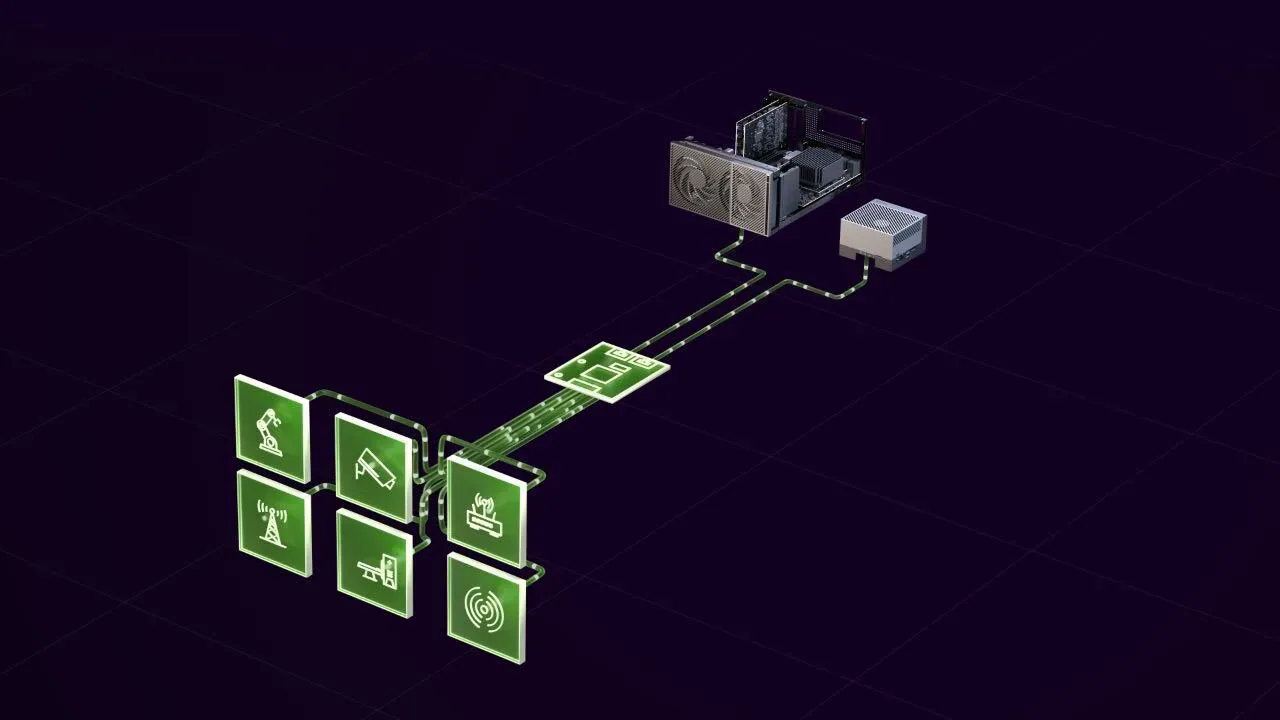
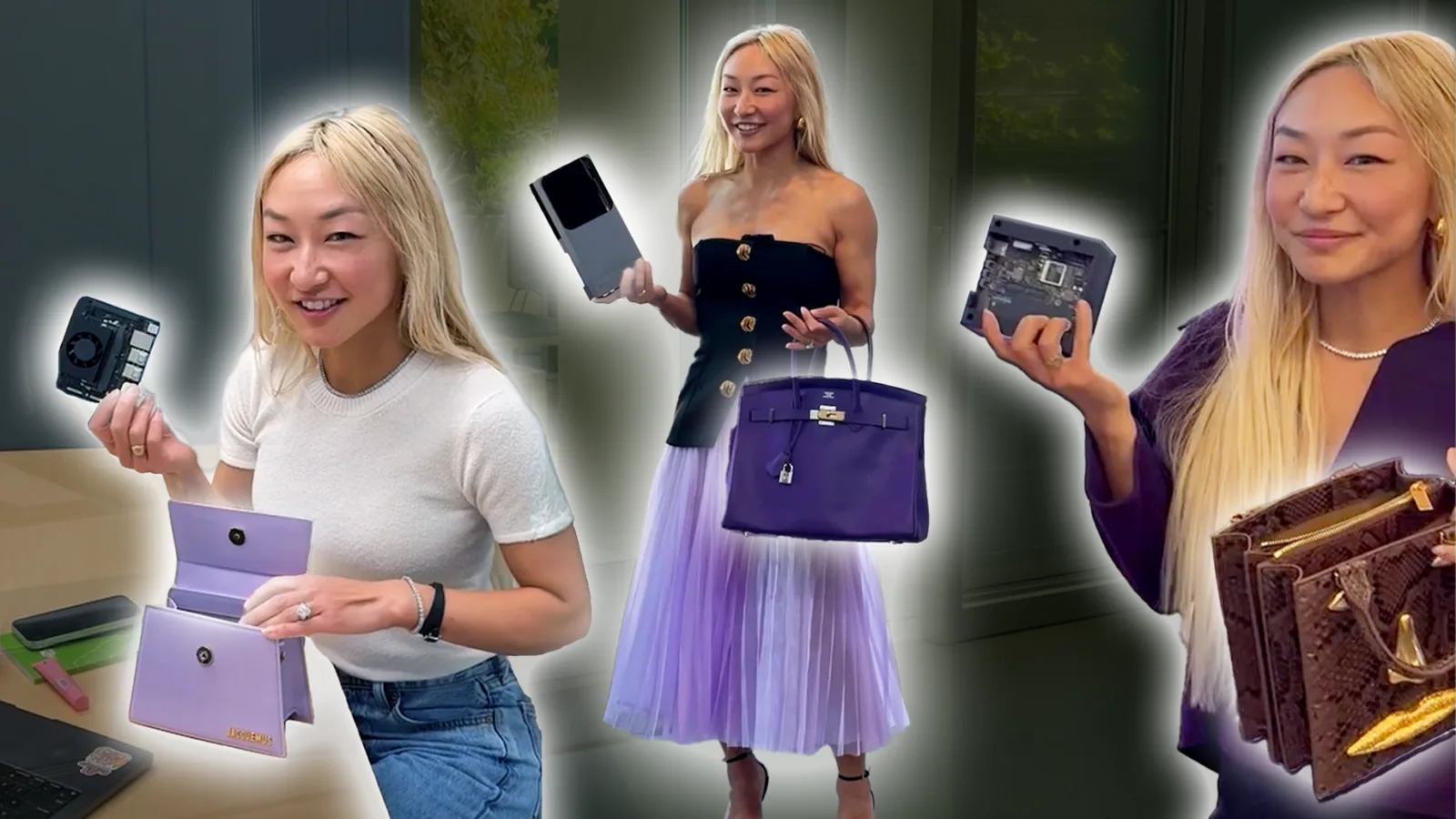
NVIDIA highlights its Jetson lineup for edge AI and robotics, from the 67 TOPS Orin Nano Super developer kit to the 2070 FP4 teraflops AGX Thor with 128GB of memory, with example projects for each tier.
NVIDIA published a deployment guide for AI-Q 2.0 on Oracle Cloud Infrastructure, using Terraform for OCI resources and Helm for Kubernetes workloads on OKE. The setup creates a working AI-Q endpoint in about 20 to 25 minutes.
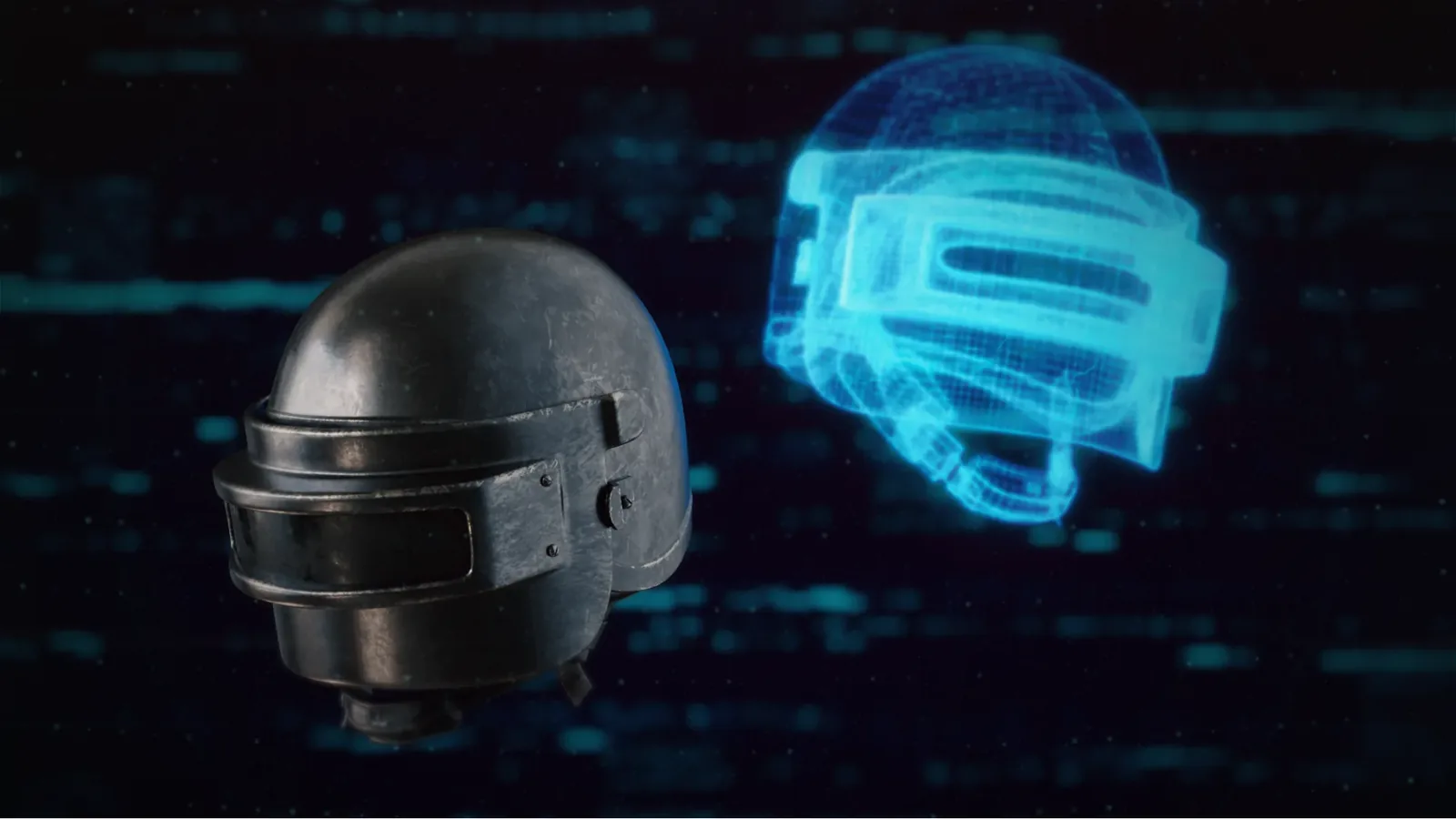
PUBG Ally uses a 2 billion parameter Mistral-NeMo-Minitron-2B model on the player's GPU, with a System 1 behavior tree for reflexes and a System 2 language layer for reasoning. KRAFTON details quantization, KV cache reuse, and tool-based grounding.
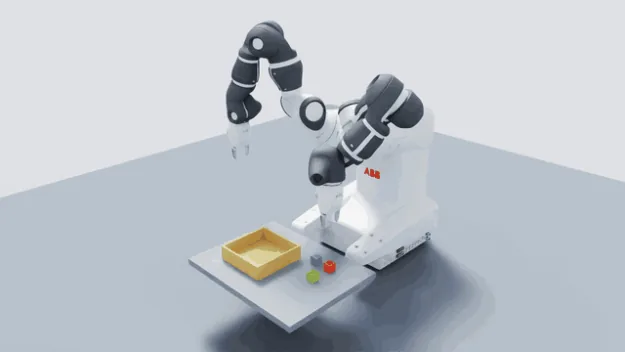
NVIDIA demonstrates a five-step workflow using Omniverse libraries and frontier AI models to convert an ABB YuMi robot from STEP files into a simulation-ready OpenUSD asset, covering appearance, physics, validation, and pick-and-place testing in Isaac Sim.
NVIDIA's Seattle Robotics Lab and Isaac team detail how a modular classical pipeline, not end-to-end learning, achieved over 95% success on GB300 tester tray busbar assembly, with a 160-second cycle time.
NVIDIA released DOCA AI agent skills on GitHub, providing agents with verified API signatures, hardware requirements, and build constraints. In a 65-prompt evaluation, agents with skills satisfied 100% of checklist items versus 19% without, reducing handwritten code by 73% in a demo.
NVIDIA introduced a reference design that pairs OpenShell on Vera CPUs with Sentry on BlueField-4 DPUs, placing out-of-band policy enforcement on the node's only path to the model. The platform targets agents that drift from intended tasks and need independent, hardware-level controls.
NVIDIA's Secure Agent Workspace Reference Design shifts agent execution from user devices to managed VMs, adding perimeter and runtime controls, credential proxies, and GitOps-based deployment for on-prem or cloud.
We count visits on the server, cookie-free. You can also let this browser tell us how long you read, how far you scroll and which links you follow. It stays with us.
 AppleEdge AINews
 NVIDIA